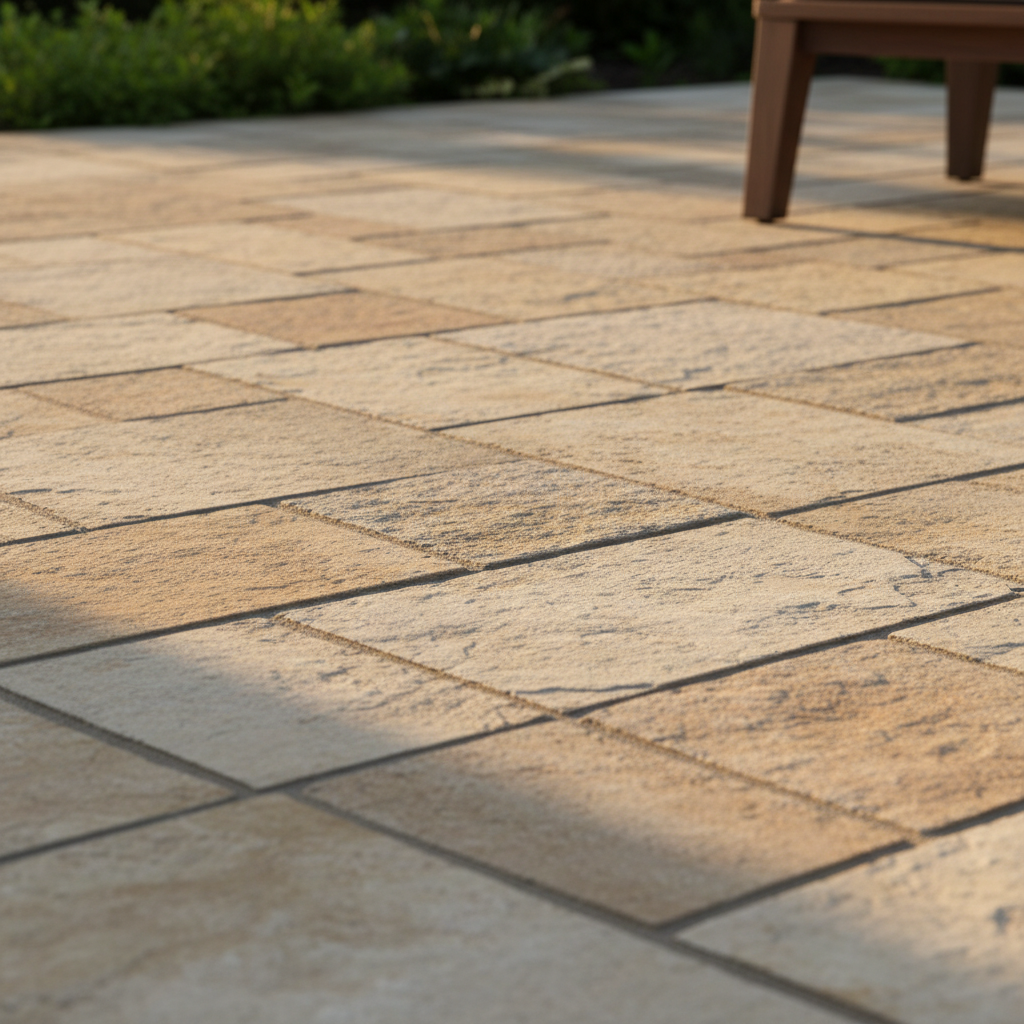
How Much Does a Patio Cost by Material?
Material choice is the single biggest cost driver in patio installation. The following ranges reflect 2026 installed costs in the Collingwood and Georgian Bay market, including materials, base preparation, and labour. See our full hardscaping services for the types of work involved.
Natural Stone (Flagstone, Granite, Limestone)
- Installed cost: $30 to $80 per square foot
- 400 sq ft patio: $12,000 to $32,000
- Premium option with natural colour variation and texture that improves with age
- Higher labour cost due to irregular shapes requiring hand-fitting and cutting
- Freeze-thaw resistant when installed on a proper engineered base
- Each stone is unique - no two natural stone patios look the same
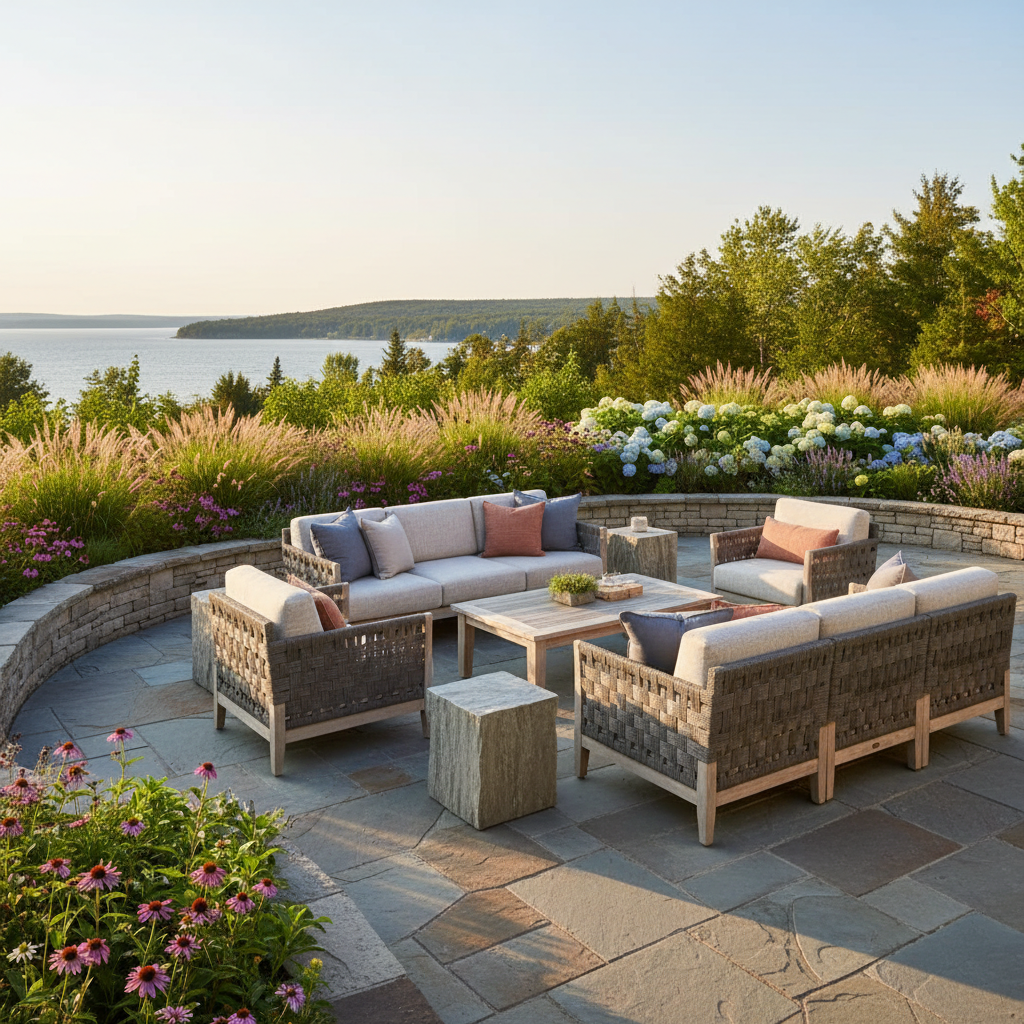
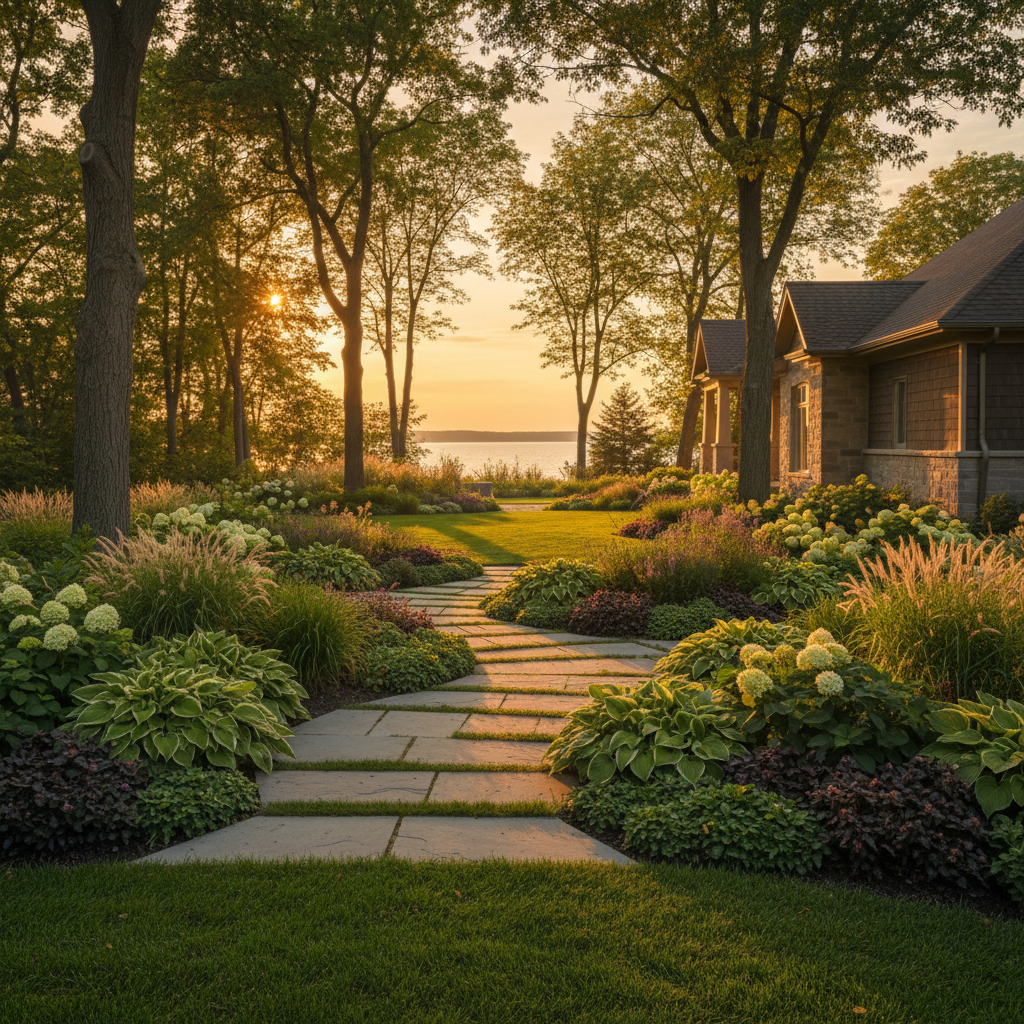
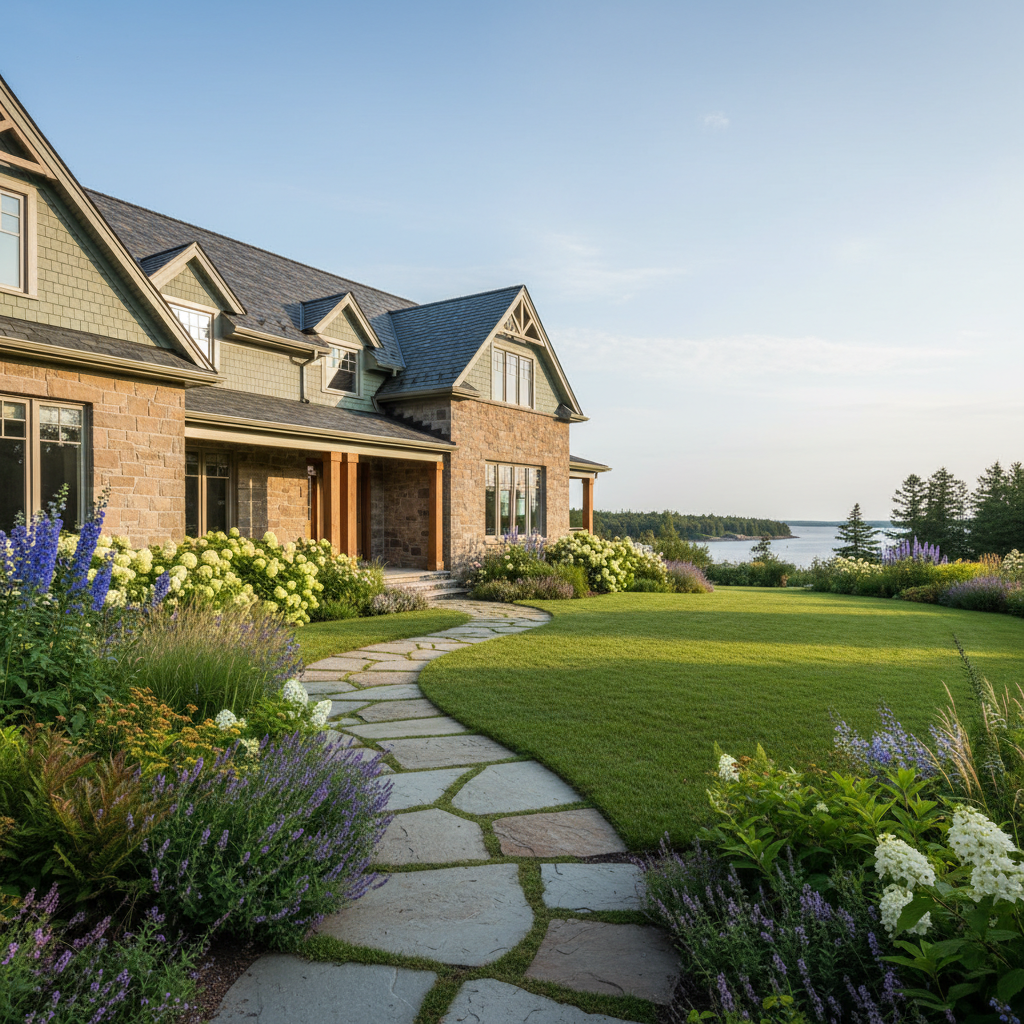
Natural stone patios in the Georgian Bay corridor tend toward Eramosa limestone, Algonquin granite, and tumbled flagstone. These materials have a warm, permanent character that reads well against the area's cedar homes and the Escarpment backdrop. The premium over interlock is real, but the material ages differently: it develops depth and character over decades rather than showing wear.
Interlock Pavers (Concrete Pavers, Permeable Pavers)
- Installed cost: $17 to $35 per square foot
- 400 sq ft patio: $6,800 to $14,000
- The most popular residential patio choice in Ontario
- Uniform shapes allow efficient installation with wide style range
- Permeable pavers cost 15 to 20% more but manage stormwater and are increasingly required by municipal bylaws
- Techo-Bloc and Unilock designer series can approach natural stone costs at the premium end
Interlock pavers at the mid-range are an excellent investment. The key is material quality: the cheapest pavers from budget suppliers fade, chip, and stain within a few years. We use Techo-Bloc and Unilock products, which carry manufacturer warranties and hold their colour far longer than commodity options.
Poured Concrete (Stamped, Brushed, or Exposed Aggregate)
- Installed cost: $20 to $40 per square foot
- 400 sq ft patio: $8,000 to $16,000
- Stamped concrete mimics natural stone at lower cost - but with real tradeoffs in Ontario's climate
- Exposed aggregate and brushed finishes are more durable than stamped in freeze-thaw conditions
- Surface cracking is common with stamped concrete after 3 to 5 Ontario winters
- Repairs are difficult to blend - cracks often look patched rather than repaired
Mixed Material (Natural Stone + Pavers)
- Installed cost: $25 to $60 per square foot
- Natural stone for the main surface, pavers for borders, paths, or secondary zones
- Allows the character of stone where it matters most while managing total cost
- Requires careful material coordination - colours and textures must complement each other
How Much Does a Patio Cost by Size?
These size tiers reflect the most common residential patio configurations we encounter in the Collingwood area. All ranges assume interlock pavers at the lower end and natural stone at the upper end of the estimate.
Small Patio (100 to 200 sq ft)
A bistro table and two chairs - enough for a morning coffee spot or a secondary seating area. Typically $3,000 to $10,000 depending on material. Common for side yards, entrance patios, or transition spaces. At this scale, material choice has a larger percentage impact on cost.
Medium Patio (300 to 400 sq ft)
This is where most Collingwood-area patio projects land. A 300 to 400 sq ft patio fits a dining table, a seating group, and a fire feature. Typically $8,000 to $25,000. It is also the size that starts to feel like a proper outdoor room rather than a slab with furniture on it. This is where the "how much should a 20x20 patio cost?" question is most commonly asked: a 400 sq ft interlock patio runs $6,800 to $14,000 installed; the same footprint in natural stone runs $12,000 to $32,000.
Large Patio (500 to 800 sq ft)
A substantial outdoor living space with room for multiple zones - dining, lounging, a fire feature, and possibly an outdoor kitchen footprint. Typically $15,000 to $50,000. At this scale, a design process is essential: without it, large patios often become a single undifferentiated surface that does not function as well as a thoughtfully zoned smaller one. Our design-build process ensures the investment is planned, not improvised.
Estate-Scale Patio (1,000+ sq ft)
Multi-level terracing, integrated steps, built-in seating, an outdoor kitchen, and fire features. These projects start at $40,000 and can exceed $80,000 for premium natural stone with full integration across all features. This scale is common in our Blue Mountain, Craigleith, and Georgian Bay waterfront projects, where the outdoor space is expected to match the home's scope and quality.
What Drives Patio Costs Higher?
Understanding what pushes costs above base ranges helps you evaluate any quote you receive and make informed decisions about where to invest and where to simplify.
- Site preparation and grading: A level, accessible lot with good drainage is the cheapest to work on. A sloped site requiring re-grading, retaining walls, or removal of an existing surface adds $3,000 to $8,000 or more before the patio itself begins. The clay-heavy soils common in parts of Thornbury and Collingwood require more drainage engineering than sandy or loam sites.
- Base depth for Ontario's freeze-thaw cycle: In the Collingwood area, a proper patio base needs to be 8 to 12 inches deep to prevent frost heave. Companies that cut this to 4 to 6 inches reduce their installation cost significantly but build a patio that will settle, heave, and crack within 2 to 3 winters. Fixing a failed base means removing the entire surface, re-excavating, and starting over - it costs more than doing it right the first time. One of our Lora Bay clients specifically noted: 'Patrick and his team excavated first and added much needed drainage - we are one of the only lots that doesn't flood in the neighbourhood.'
- Drainage engineering: Water must flow away from your foundation and off the patio surface. On clay-heavy soils, drainage is engineered, not assumed. French drains, slot drains, and weeping tile add to the upfront cost but protect both the patio and the home's foundation for decades.
- Pattern complexity: A running-bond or herringbone interlock pattern is efficient to install. A random-lay natural stone pattern with mixed sizes, curves, or decorative inlays requires significantly more labour for cutting, sorting, and fitting. Pattern upgrades can add $5 to $15 per square foot to the labour cost.
- Integrated features: Built-in fire pits ($3,000 to $8,000), seat walls ($2,000 to $5,000 per linear foot), steps and retaining walls ($3,500 to $8,000), and outdoor kitchen bases ($5,000 to $15,000) each expand the patio scope. These features transform a surface into an outdoor living space - they are usually worth including in the original design rather than adding later when the ground has to be disturbed again.
- Site access: Narrow side yards, steep driveways, limited staging areas, and long carry distances increase labour time and equipment costs. A backyard with direct wide access costs less to build than one where materials travel through a gate or up stairs.
Interlock vs. Natural Stone: Which Is Right for Your Patio?
This is the most common decision point for homeowners planning a patio in the Collingwood area. Here is an honest comparison across the factors that matter most.
- Cost: Interlock is more accessible at $17 to $35/sq ft installed vs. natural stone at $30 to $80/sq ft. However, premium interlock (Techo-Bloc Raffinato, Unilock Brussels Stone) at $30 to $35/sq ft overlaps with entry-level natural stone. The gap between mid-range interlock and mid-range natural stone is real, but the gap between budget interlock and premium interlock is also significant.
- Durability: Both are durable on a proper base. Interlock can last 25 to 50 years (per industry data) when installed on a 8 to 12 inch granular base with polymeric sand joints. Natural stone is effectively permanent - flagstone patios 50+ years old are common. The weak link for both is not the surface material but the base preparation. A poorly installed natural stone patio fails as quickly as a poorly installed interlock one.
- Maintenance: Interlock requires occasional joint sand replenishment and may benefit from sealing every 3 to 5 years. Natural stone requires minimal ongoing maintenance - annual cleaning and an occasional check for shifted stones if the base is inadequate. Polymeric sand in interlock joints can fail in severe freeze-thaw cycles if improperly applied, leading to weed colonization. Natural stone's irregular joints are less susceptible to this issue.
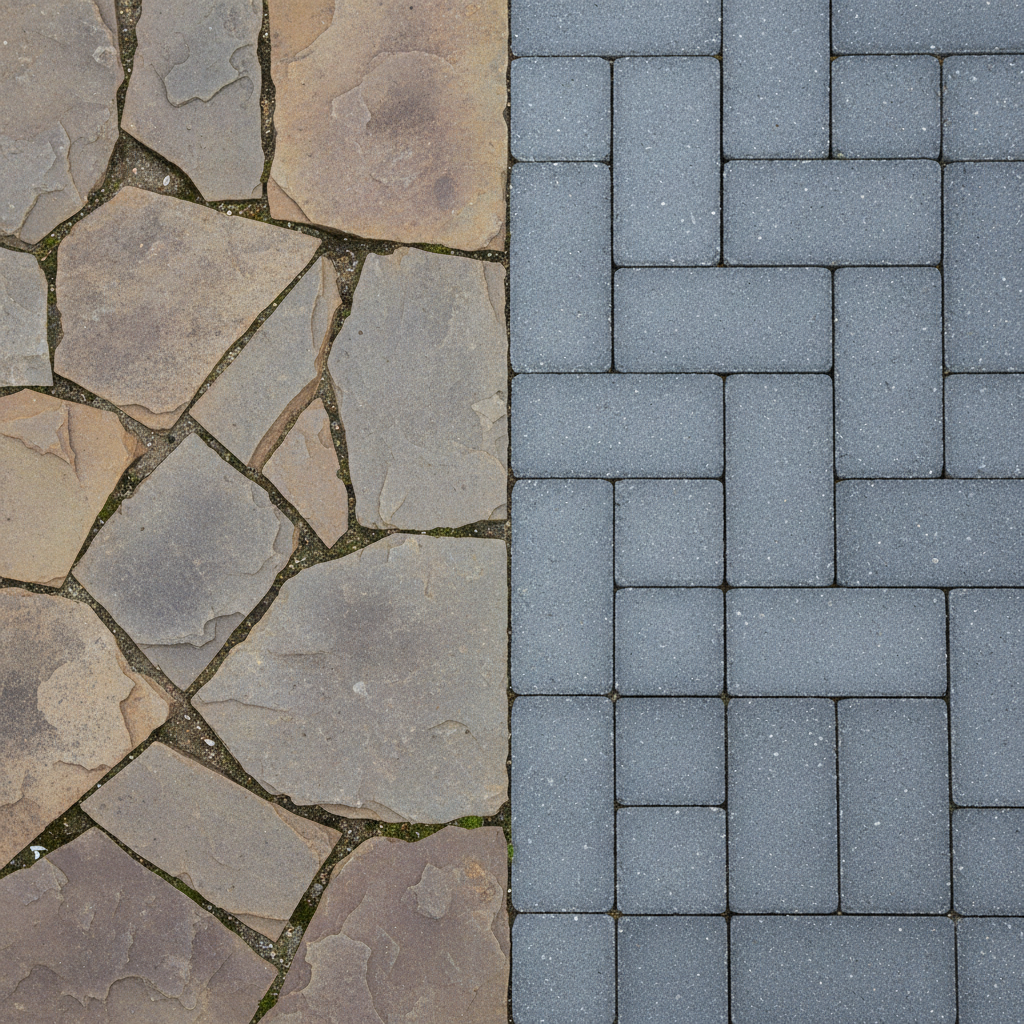
- Aesthetics: Interlock offers uniform lines, consistent colour, and a wide style range - from simple functional to premium designer. Natural stone offers organic variation, texture, and character. Each natural stone patio looks different from every other one; each interlock patio looks similar to others using the same product. Neither is inherently better - the right choice depends on the property's character and your own aesthetic preference.
- Climate performance: In the Georgian Bay freeze-thaw cycle, both perform well on a proper base. Natural stone's irregular joints tend to handle polymeric sand degradation better than interlock over multiple severe winters. Concrete stamped patterns are the most vulnerable to the freeze-thaw cycle; genuine interlock pavers and natural stone both hold up well when installed correctly.
We install both at Retreat. The decision almost always comes down to your property's architectural character and your personal aesthetic. During the design consultation, we walk through material samples and show you examples from recent local projects. A stone that looks one way in a catalogue often looks entirely different in context. Reach out to arrange a site visit and see materials in the light conditions of your property.
Common Patio Mistakes That Cost More in the Long Run
Whether you are comparing quotes or considering a DIY project, these are the patterns we see most often that end up costing more than doing it right the first time.
- Skipping proper base preparation: The most expensive mistake in patio construction. An insufficient base (under 8 inches in Ontario's climate) leads to frost heave, settling, and cracking within 2 to 3 winters. Fixing it means removing the entire patio surface, re-excavating to the proper depth, rebuilding the base, and relaying all the material. The repair cost exceeds what proper installation would have cost at the outset.
- Ignoring drainage from the start: A patio that pools water or directs runoff toward your foundation creates problems beyond the patio itself. Drainage must be designed and engineered before the first stone is placed - it cannot be retrofit effectively after installation.
- Choosing material based only on initial price: The cheapest interlock pavers may look acceptable at installation but fade, chip, and stain disproportionately to the saving. Material quality affects 25-year performance. Spend 15 to 20% more on premium material and save the full replacement cost.
- Attempting DIY on sloped or complex sites: A flat, well-draining site with good access is manageable for a skilled DIYer. A sloped site, a site requiring retaining walls, or a site with drainage issues requires engineering, proper equipment, and the experience to sequence the work correctly. The savings rarely survive the complications.
- Not accounting for Ontario's freeze-thaw cycle: Installation techniques that work in warmer climates fail in Collingwood. Base depth, material selection, joint treatment, and drainage must all be designed for a climate that can freeze and thaw dozens of times between November and April. National DIY guides are often written for USDA hardiness zones that do not experience this cycle.